


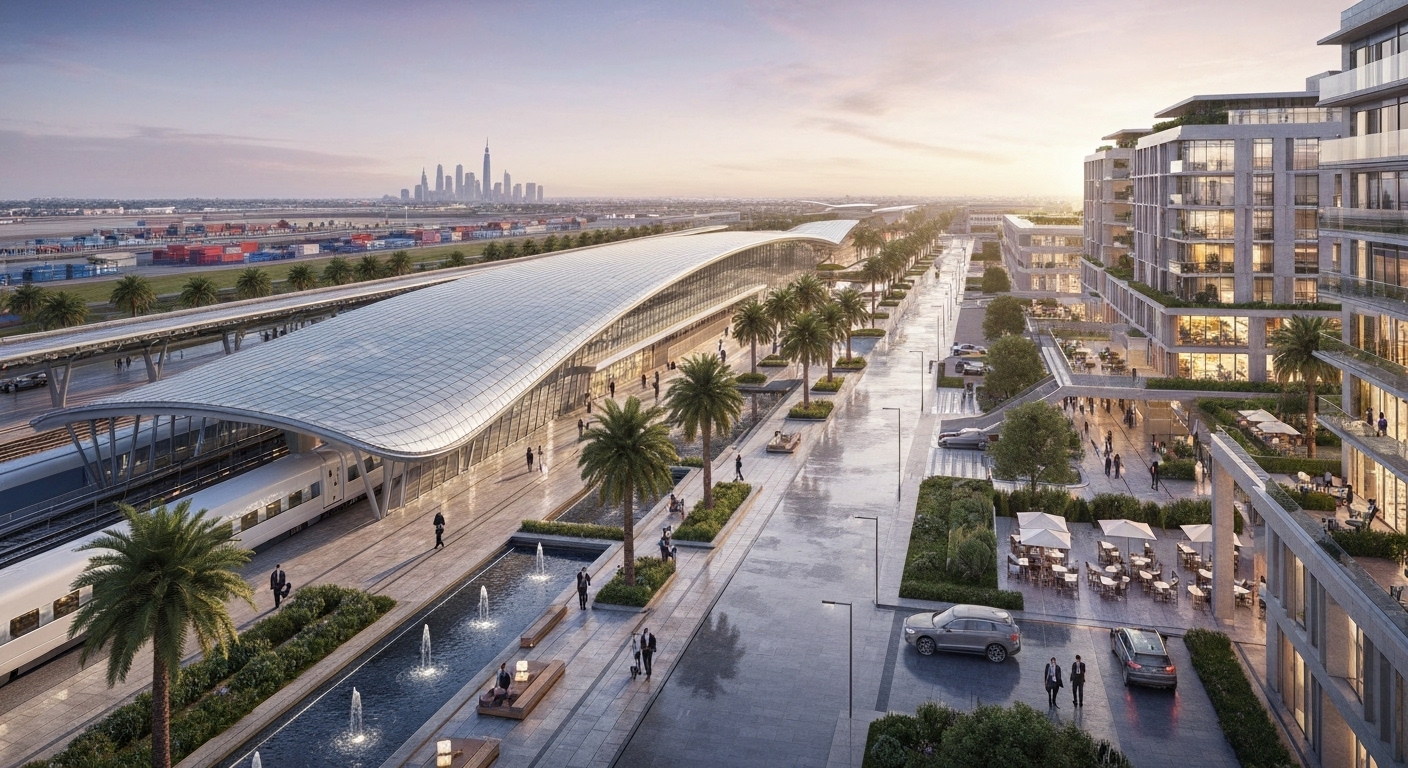
The UAE’s ambitious Etihad Rail project represents one of the most significant infrastructure developments in the region’s modern history. As the railway network takes shape, savvy investors are positioning themselves near future stations, recognizing the transformative potential of this transportation revolution. However, like any investment opportunity, the prospect of rail-adjacent property investment demands careful analysis of both potential rewards and inherent risks.
Understanding the Etihad Rail Project: Scope and Economic Impact
The Etihad Rail network is set to span over 1,200 kilometers, connecting all seven emirates and linking the UAE to the broader GCC railway system. This massive infrastructure project follows the proven model of successful transit-oriented developments worldwide, where railway connectivity has historically driven significant property value appreciation.
The economic impact extends far beyond transportation efficiency. Similar to Dubai’s Metro Blue Line extension, which dramatically boosted property values along transit corridors and created new commercial hubs, the Etihad Rail is expected to generate substantial economic activity across multiple emirates, fundamentally reshaping regional connectivity and accessibility.
The ‘Reward’ Side: Unpacking the Investment Potential
Property investments near future Etihad Rail stations offer compelling advantages that mirror successful transit-oriented developments globally. Enhanced connectivity typically drives rental demand from professionals seeking convenient commutes, while businesses gravitate toward accessible locations, creating vibrant commercial ecosystems.
Historical precedents in Dubai demonstrate how infrastructure development enhances property values in emerging districts. Properties with direct transit access or proximity to major transportation corridors consistently command premium valuations and achieve higher occupancy rates. The rail network promises to create similar dynamics across previously underconnected regions.
The rental yield potential appears particularly attractive, with developments in high-growth corridors already achieving above-average yields of 6-10%. As the railway network becomes operational, these returns could strengthen further as demand increases for well-positioned properties.
The ‘Risk’ Side: Navigating Potential Challenges and Uncertainties
Despite the promising outlook, rail-adjacent investments carry specific risks that investors must carefully evaluate. Construction delays pose immediate concerns, as any postponement in railway completion could impact anticipated property value appreciation timelines. Market oversupply near stations represents another significant risk, particularly if multiple developers simultaneously target the same corridors without adequate demand analysis.
Economic uncertainties, both regional and global, could affect the project’s timeline and ultimate success. While Dubai’s property market has demonstrated remarkable stability amid global economic fluctuations, the nascent nature of the Etihad Rail network means its impact on property values remains largely theoretical until operational.
Additionally, not all rail stations will generate equal economic activity. Some locations may fail to develop the anticipated commercial ecosystems, leaving property investments in less advantageous positions than originally projected.
Key Factors Influencing Property Value Near Future Stations
Several critical factors will determine investment success near Etihad Rail stations. Proximity alone is insufficient; the surrounding infrastructure, including road networks, public facilities, and commercial developments, will significantly influence long-term value appreciation.
The integration of mixed-use developments combining residential, commercial, and lifestyle amenities tends to outperform standalone assets. Smart layouts and modern amenities aligned with contemporary lifestyle expectations will prove crucial for sustained demand.
Local economic fundamentals, including employment centers, educational institutions, and healthcare facilities, will determine whether areas around stations develop into thriving communities or remain primarily transit points.
Identifying Prime Investment Zones Along the Etihad Rail Network
Strategic location selection requires analyzing multiple variables beyond mere station proximity. Areas with existing commercial activity, government development plans, and demonstrated population growth patterns offer stronger foundations for rail-adjacent investments.
Investors should prioritize locations where the railway complements existing transportation infrastructure rather than competing with it. Areas designated for major commercial or industrial developments that align with the railway timeline present particularly attractive opportunities.
Mitigating Risks and Maximizing Returns: A Strategic Approach
Successful rail-adjacent investment requires a diversified approach that balances location, timing, and property type. Investors should avoid concentrating exclusively in railway corridors, instead integrating these opportunities within broader, balanced portfolios.
Due diligence becomes crucial, requiring thorough analysis of construction timelines, local development plans, and regional economic projections. Understanding the specific role each station will play within the broader network helps identify locations likely to become major nodes versus simple transit points.
Danube Properties’ Vision for Rail-Adjacent Developments
As a leading developer in the UAE market, Danube Properties recognizes the transformative potential of transportation-oriented development. Our approach emphasizes creating integrated communities that combine residential excellence with strategic location advantages.
Danube’s commitment to on-time delivery and exceptional quality positions our developments to capitalize on infrastructure improvements while providing investors with reliable, professionally managed assets. Our portfolio strategy focuses on areas where transportation connectivity enhances long-term value while supporting sustainable community development.
The Etihad Rail represents a generational investment opportunity, but success requires careful planning, realistic expectations, and professional expertise. By balancing the considerable rewards with prudent risk management, investors can position themselves to benefit from the UAE’s transportation revolution while building resilient, long-term wealth.