


Dubai’s real estate market is renowned for its transparency and regulatory oversight, particularly regarding utilities such as cooling. For anyone asking, “What are the cooling regulations in Dubai and who pays for it?” understanding the local rules and billing structures is crucial for both budgeting and making informed investment decisions.
Cooling, a major component of living costs in Dubai, is governed by a highly regulated framework overseen by authorities such as the Real Estate Regulation Authority (RERA). These regulations mandate transparency, fairness, and compliance for both property owners and tenants. Across Dubai’s established and emerging communities—such as Jumeirah Village Circle, Business Bay, and Al Furjan—most modern buildings feature centralized or district cooling systems. These systems are designed for both efficiency and sustainability, helping manage the city’s demanding climate.
Chiller-Free vs. District Cooling: What’s the Difference?
In Dubai real estate, two main cooling models impact how residents and investors pay: chiller-free and district cooling.
Chiller-free apartments generally include the cost of air conditioning within the rent. The landlord absorbs the cooling charges and, in turn, factors them into the overall rental rate. This simplifies monthly budgeting for tenants, particularly in areas where chiller-free units are common.
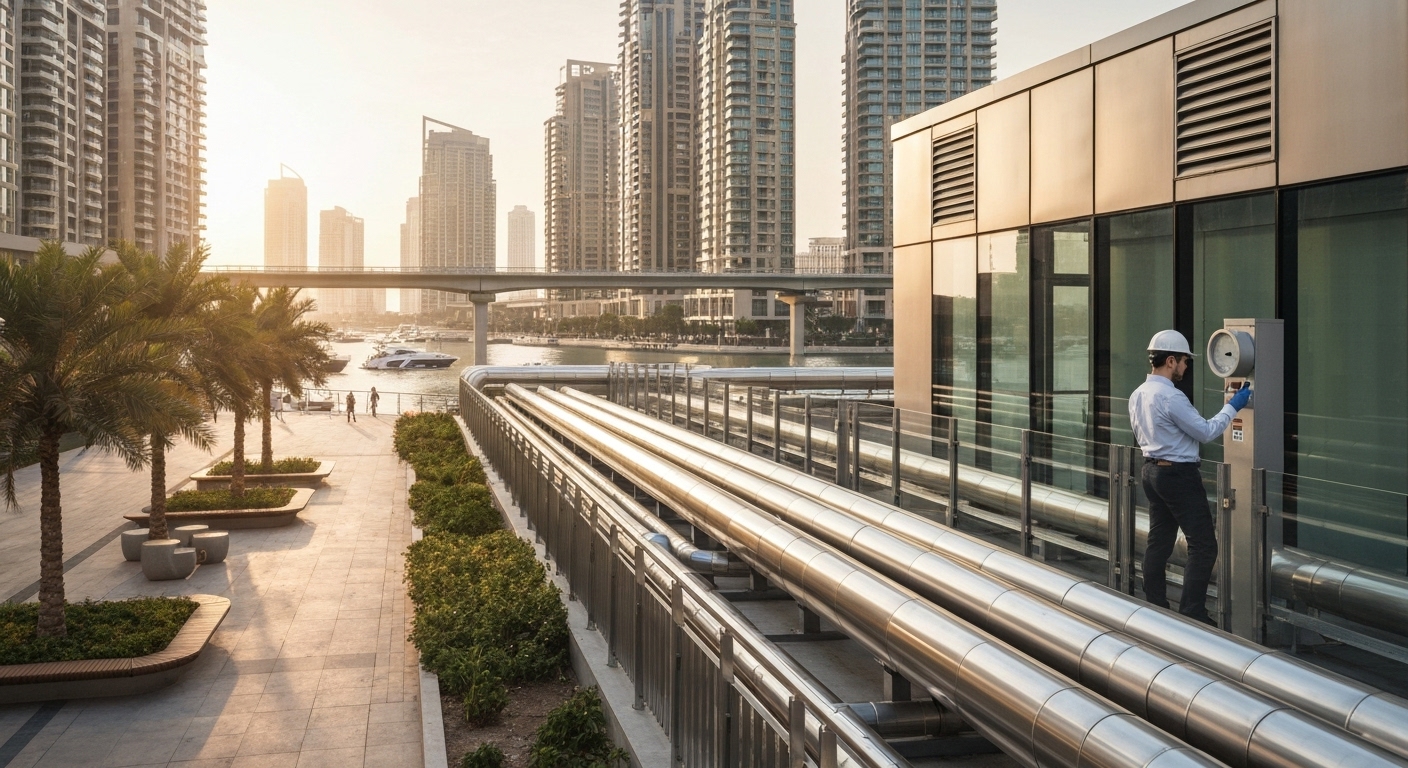
In contrast, district cooling providers such as Empower and Emicool supply chilled water through a centralized plant, billing users separately from standard electricity. In this model, tenants or property owners receive a distinct cooling bill—often with consumption-based and fixed capacity charges. Many popular Dubai neighborhoods with large residential towers—including Dubai Marina, Jumeirah Lake Towers, and Downtown Dubai—primarily use district cooling.
Who Pays for Cooling in Dubai? Tenant, Landlord, or Developer?
Responsibility for cooling charges in Dubai depends on several factors, including the building’s cooling system and the terms of the tenancy contract. Most frequently, tenants pay district cooling bills directly to providers, whereas in chiller-free properties, the landlord covers the cost as part of the rent.
For investors and absentee landlords, understanding this distinction is vital, as it shapes both rental appeal and net returns. Developers are responsible for installing efficient systems and securing agreements with cooling providers, but ongoing fees are typically shouldered by the current occupant.
Navigating Cooling Bills: DEWA, Empower, Emicool, and More
Cooling costs in Dubai are paid either through your Dubai Electricity & Water Authority (DEWA) account—for chiller-free buildings—or directly to a district cooling company (such as Empower, Emicool, Tabreed, or Palm District Cooling). Utility bills in Dubai typically range from AED 800 to AED 1,200 per month for an average apartment, with cooling representing a significant share. Tenants should also be aware of additional fees collected with cooling bills, including municipality charges and knowledge fees.
Decoding Cooling Service Agreements (CSAs) and Charges
When occupying or investing in a property in Dubai, review the Cooling Service Agreement (CSA) issued by the cooling provider. The CSA sets out capacity charges (a fixed annual fee) and consumption charges (based on actual cooling usage). These contracts clarify obligations—spelling out who is financially responsible and under what terms charges may change.
Tips for Managing and Reducing Your Cooling Costs in Dubai
Smart usage and regular maintenance can significantly reduce cooling expenses. Residents should set thermostats between 24°C–26°C, ensure doors and windows are sealed, and schedule routine AC servicing. For property owners, investing in energy-efficient appliances and window insulation can further maximize savings. Newcomers should study their tenancy contract to confirm whether their property is chiller-free; this will directly affect their monthly obligations.
Future of Cooling in Dubai: Efficiency and Sustainability Initiatives
Dubai’s commitment to sustainability is reflected in its push for innovative cooling solutions. New developments are increasingly leveraging smart grid technology, building insulation standards, and modern district cooling plants designed for energy efficiency. Regulatory bodies continue to tighten standards, ensuring investors and residents benefit from both cost predictability and eco-friendly infrastructure.
Conclusion
Dubai’s cooling regulations are clear: payment obligations are tied to building systems and contract terms, with tenants most often responsible for district cooling bills and landlords typically covering costs in chiller-free units. Understanding these details is essential for budgeting and selecting the best property.