


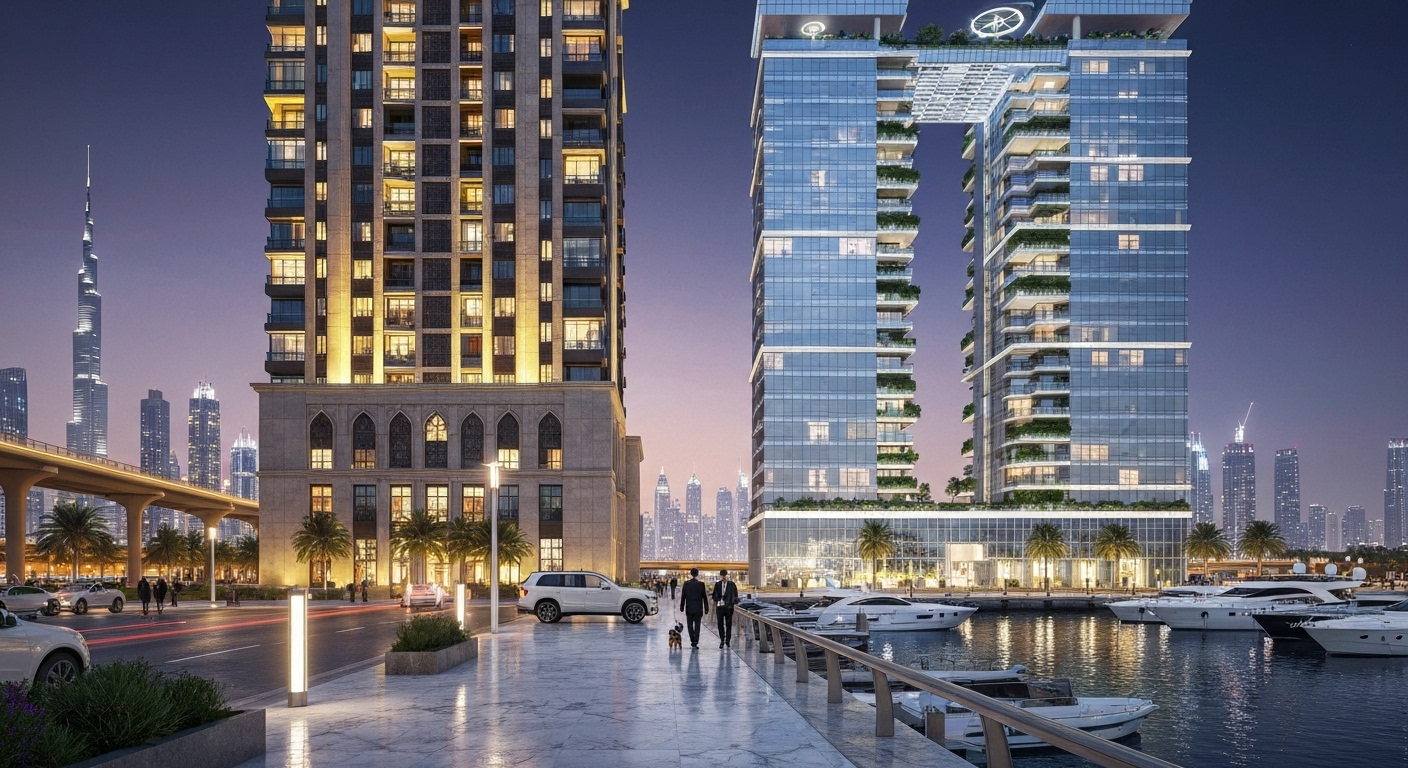
Dubai Marina has seen a striking evolution in residential towers over recent decades, prompting investors and residents to ask: what are the key differences in building quality between 2010s vs 2020s towers in Dubai Marina? In this article, we’ll break down the progression in construction quality, materials, amenities, and living standards, helping you make informed decisions about where and how to invest or live in one of Dubai’s most desirable waterfront neighborhoods.
The Evolution of Dubai Marina: A Decade of Development
Dubai Marina has transformed from a bold vision into one of the most prestigious urban communities in the UAE. Early 2010s towers focused on scale and visual impact—sky-high facades, themed lobbies, and waterfront access became hallmarks of high-rise living. However, these projects often emphasized speed of delivery during the Emirate’s rapid expansion phase, sometimes at the expense of practical design or long-term durability.
By the 2020s, priorities shifted. Developers now emphasize enhanced building quality, resilience, and user experience. The latest high-rises, including Bayz101 and Bayz102—upcoming towers by Danube Properties—illustrate these priorities. Innovations like dedicated helipads for future sky taxi integration highlight not only superior engineering but also a readiness for urban transportation trends shaping Dubai’s future. Towers completing in this decade also promise fully furnished, ultra-luxury units with superior layouts and a focus on long-term value, setting a new benchmark for Dubai Marina residencies.
Key Construction Innovations of the 2020s in Dubai Towers
The differences between the 2010s and 2020s towers are especially evident in construction techniques and the integration of technology. In the 2010s, standard reinforced concrete and glass facades were prevalent. While buildings looked modern, insulation, soundproofing, and cooling efficiency often lagged behind today’s standards.
Towers developed in the 2020s, such as Bayz102, are expected to incorporate advanced structural systems. Smart building management, improved climate control, and increased use of sustainable materials are becoming the norm. Many towers now include energy-efficient glass, high-performance insulation, and stronger fire safety systems. These not only improve comfort and safety but can also significantly reduce long-term maintenance costs and operating expenses, a crucial concern for investors and end-users alike.
Example: Smart Living in Bayz102
Bayz102 is set to offer 1,300 fully furnished ultra-luxury units, with layouts ranging from studios to 4-bedroom homes. Residents will benefit from faster, smarter elevators, integrated home automation, and improved air quality systems. These elements were rarely seen together in earlier towers but now define the 2020s approach to urban high-rise living in Dubai Marina.
Architectural Design and Material Advancements: 2010s vs. 2020s
Another marked difference is in architectural design and the use of materials. Earlier towers leaned into ornate claddings and bold colors, sometimes sacrificing energy performance for aesthetics. Common areas and amenities, while present, were less focused on community-building and often more style than substance.
By comparison, 2020s towers feature minimalist lines, high ceilings, and open-plan designs to maximize natural light and waterfront views. Premium building materials—engineered wood, imported marbles, and modern facade systems—are now non-negotiable in luxury projects. Other advancements include acoustic insulation between units, double- or triple-glazed windows, and green-certified materials that align with Dubai’s sustainability vision.
Sustainability and Smart Living: How Newer Towers Are Raising the Bar
The modern Dubai Marina high-rise is designed with sustainability in mind. Water-saving fixtures, smart power metering, and solar-ready rooftops are increasingly standard in 2020s towers. Buildings also prioritize wellness with improved indoor air quality and landscaped leisure decks, ensuring a healthier living environment that meets global wellness trends and Dubai’s own eco-strategies.
Amenity Richness and Lifestyle Offerings: A Comparison
While 2010s towers offered pools, gyms, and some children’s play areas, their amenities could be basic and maintenance-heavy. In contrast, today’s towers—like Bayz102—promise a full spectrum: multiple pools, spa zones, co-working spaces, cinema rooms, and high-speed connectivity throughout. Rooftop lounges, pet-friendly areas, and advanced security systems further highlight the 2020s approach to premium, user-focused living.
Investment Considerations: Weighing the Benefits of Newer vs. Older Properties
Investors comparing the two generations must weigh immediate cost against long-term value. Older towers may offer slightly lower entry prices but can carry greater maintenance and refurbishment risks. Newer towers deliver higher resale potential, demand premium rents, and feature futureproof amenities—making them a safer bet for sustained capital appreciation in Dubai Marina.
Commitment to Modern Building Excellence in Dubai Marina
Dubai Marina’s newest towers reflect the latest building standards and resident-focused innovations. With fully equipped luxury units, improved mobility features, and next-generation amenities, the 2020s developments set a new benchmark that distinguishes them clearly from towers built in the previous decade.
In summary, the differences between 2010s vs 2020s buildings in Dubai Marina largely revolve around smarter construction, future-ready amenities, enhanced sustainability, and stronger long-term value. For investors and residents alike, newer towers represent the next chapter in high-rise living.
For tailored guidance on choosing the right tower in Dubai Marina, professional real estate advisors can assist with community insights and property comparisons.