


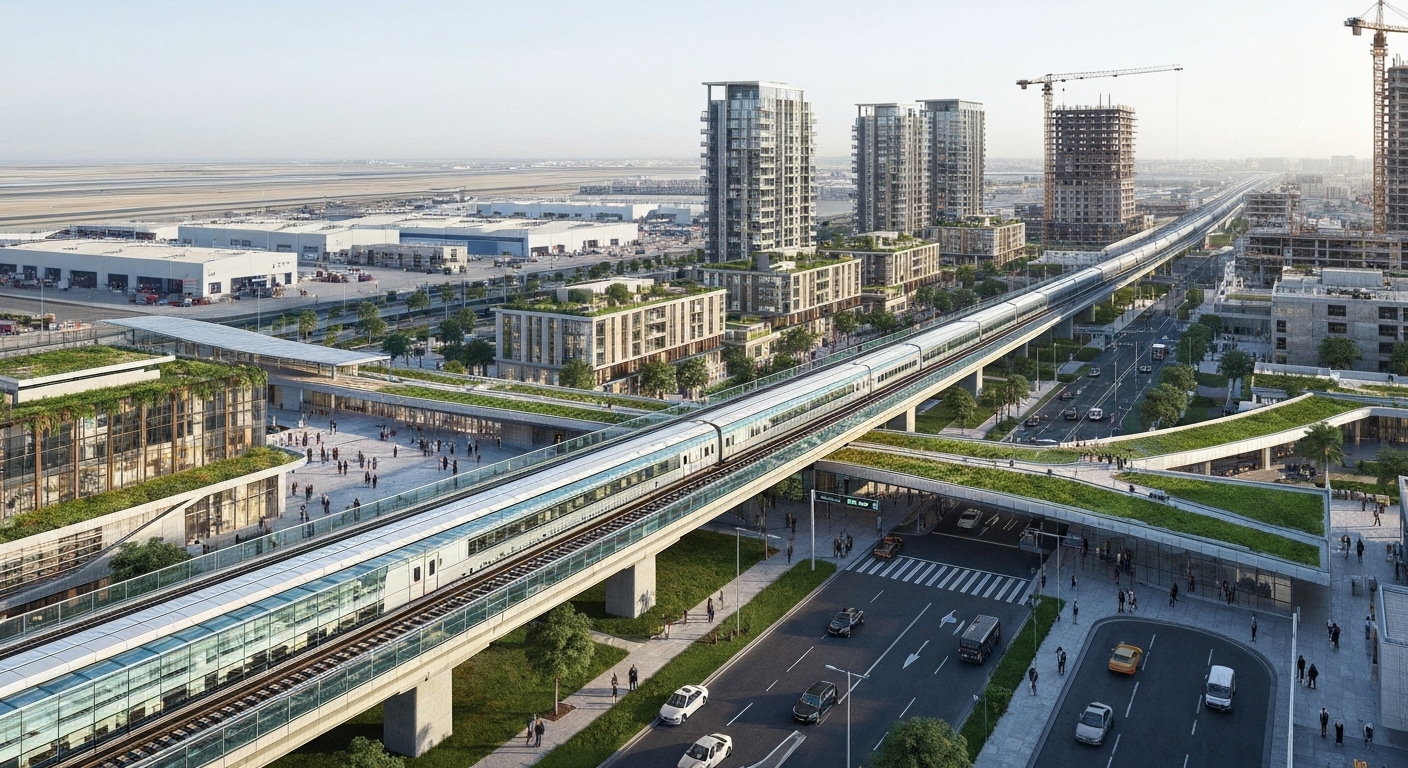
The UAE’s ambitious Etihad Rail project represents more than just transportation infrastructure—it’s a catalyst for unprecedented real estate transformation across the Emirates. As this nationwide railway network takes shape, discerning property investors are positioning themselves to capitalize on the connectivity revolution that will redefine property values and investment opportunities.
Understanding the Vision: What is Etihad Rail and Its Purpose?
Etihad Rail stands as the UAE’s flagship railway project, designed to connect all seven Emirates through a modern, efficient passenger and freight network. This 1,200-kilometer railway system will link major cities, ports, and industrial zones, creating an integrated transportation backbone that reduces travel times, enhances economic connectivity, and drives sustainable urban development. The project aligns with the UAE’s Vision 2071, positioning the nation as a global logistics hub while supporting the transition to a knowledge-based economy.
Direct Beneficiaries: Key Residential and Commercial Hubs Along the Route
The railway’s primary corridors will directly impact property markets in Abu Dhabi, Dubai, Sharjah, Ras Al Khaimah, and Fujairah. In Dubai, areas around the planned stations in Dubai South and Al Maktoum International Airport are experiencing significant investor interest. These zones offer dual benefits of railway connectivity and proximity to the world’s future largest airport.
Abu Dhabi’s downtown core and Khalifa City emerge as prime beneficiaries, with enhanced connectivity to Dubai reducing commute times to under 50 minutes. This development makes Abu Dhabi residential properties increasingly attractive to Dubai-based professionals seeking affordable housing options without sacrificing career opportunities.
Sharjah represents perhaps the most compelling opportunity, as improved connectivity will likely accelerate its transformation from a commuter city to a destination in its own right. Areas like Al Majaz and Al Khan are positioned to benefit from increased accessibility while maintaining their competitive pricing advantage.
Beyond the Stations: Indirectly Impacted Growth Corridors and Emerging Markets
The railway’s influence extends far beyond station locations. Ajman and Umm Al Quwain, while not directly on the main route, will benefit from improved regional connectivity and spillover development. These emirates offer compelling entry points for investors seeking growth potential at attractive price points.
Industrial and logistics zones throughout the UAE will experience renewed demand as businesses seek rail-accessible locations. Areas like JAFZA in Dubai and ICAD in Abu Dhabi are already seeing increased interest from logistics companies, creating secondary demand for worker housing and commercial services.
Property Value Prognosis: How Etihad Rail is Expected to Reshape Real Estate ROI
Historical analysis of railway projects globally suggests properties within 10 kilometers of stations typically experience 15-25% value appreciation over five years post-completion. The UAE’s unique market dynamics, combined with government backing and strategic economic positioning, suggest even stronger potential returns.
Residential properties in connectivity-enhanced areas are expected to benefit from reduced transportation costs and time savings, effectively expanding the catchment area for employment centers. Commercial real estate, particularly retail and hospitality, will benefit from increased foot traffic and tourism accessibility.
Strategic Investment: Maximizing Returns in the Etihad Rail Era
Smart investors are focusing on three key strategies: acquiring properties in emerging corridors before major appreciation, investing in mixed-use developments near planned stations, and targeting affordable housing markets that will benefit from improved connectivity to employment centers.
Off-plan properties in rail-adjacent areas offer particular appeal, as developers increasingly incorporate connectivity advantages into project planning and pricing. However, investors should prioritize established developers with proven delivery records and strong market positioning.
Challenges and Considerations: A Balanced Perspective for Investors
While Etihad Rail presents significant opportunities, investors must consider potential challenges. Construction timelines may impact short-term property values, and not all projected stations may materialize as initially planned. Market saturation in certain corridors could limit appreciation potential, particularly in already well-developed areas.
Additionally, the railway’s success depends on broader economic factors, including tourism recovery, population growth, and business expansion across the Emirates.
Danube Properties’ Role in the Connected UAE
As a forward-thinking developer, Danube Properties recognizes the transformative potential of enhanced connectivity. Our strategic project locations and commitment to delivering value-driven developments position our investors to benefit from the UAE’s evolving transportation landscape. We continue to identify opportunities where infrastructure development meets housing demand, ensuring our communities remain well-connected to opportunity.
The Etihad Rail project represents a generational opportunity for property investors who understand its far-reaching implications. By focusing on strategic locations, understanding market dynamics, and partnering with established developers, investors can position themselves at the forefront of the UAE’s connected future.