


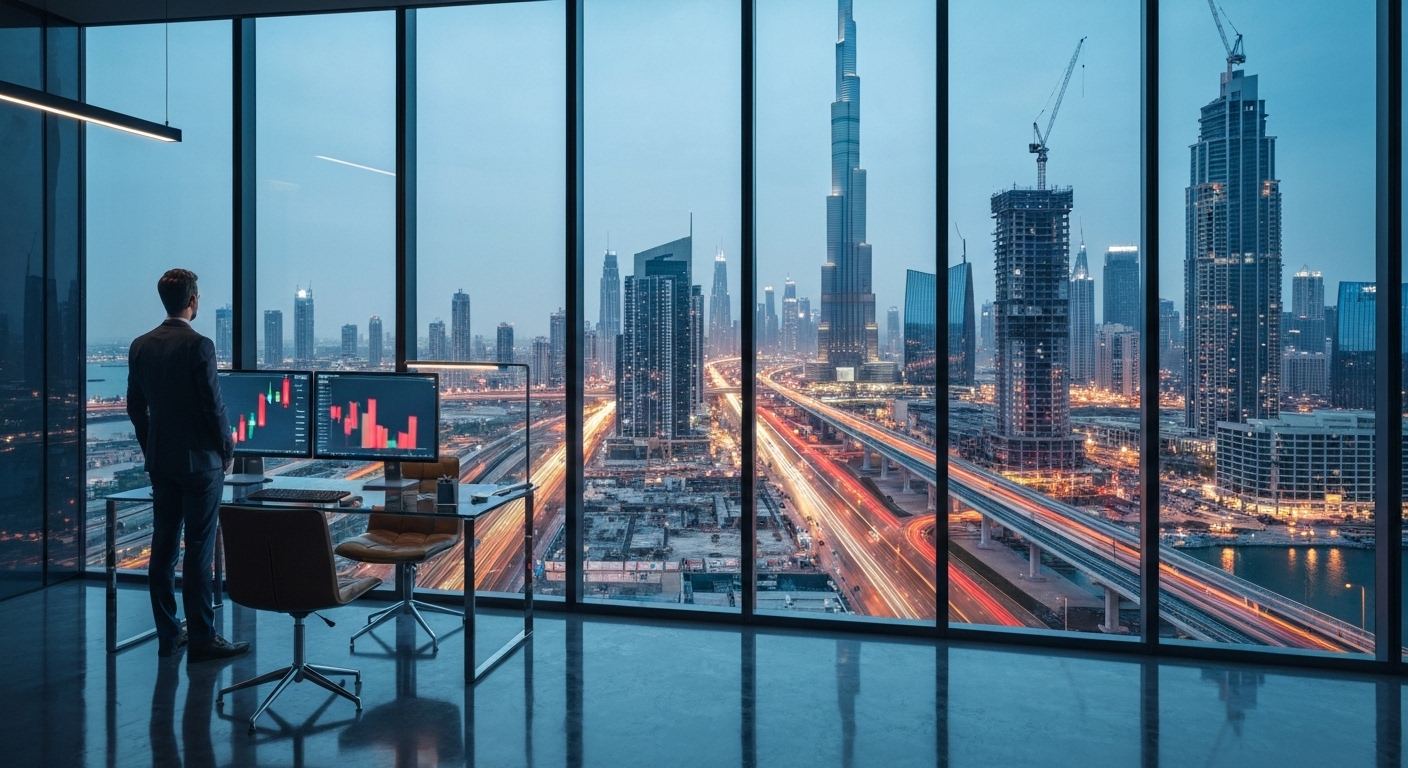
Dubai’s real estate market has delivered exceptional performance in 2025, with first-half transactions exceeding AED 431 billion – a remarkable 25% increase from 2024. Yet as investors witness this sustained growth, a critical question emerges: is the market overheating, or are we seeing sustainable expansion backed by strong fundamentals?
Understanding ‘Correction’: What Does it Mean for Dubai’s Property Market?
In real estate terms, a market correction typically involves a 10-20% decline in property values following a period of rapid growth. For Dubai’s property landscape, this concept requires careful examination beyond simple price movements. Given the market’s transformation from an exclusive enclave to an accessible investment destination for middle-income buyers, traditional correction patterns may not apply.
Current market indicators suggest that Dubai’s growth reflects genuine demand rather than speculative bubbles. The careful balancing of supply with authentic buyer interest, coupled with robust regulatory oversight, indicates a market experiencing healthy expansion rather than unsustainable inflation.
Key Factors Driving and Sustaining Dubai’s Real Estate Growth
Several fundamental drivers continue powering Dubai’s property momentum. Population growth projections indicate the city will add approximately 200,000 residents annually through 2027, creating sustained housing demand across all segments. This demographic expansion directly supports property absorption rates and rental yields.
The wealth migration trend has significantly impacted market dynamics, with high-net-worth individuals increasingly choosing Dubai as their primary residence. Properties priced above AED 10 million have seen transaction volumes surge by 63% year-on-year, demonstrating sustained luxury segment demand.
Additionally, Dubai’s strategic positioning as a global business hub continues to attract international investment. The city’s progressive visa policies and foreign ownership frameworks have enhanced investor confidence while strengthening the rental market through increased tenant demand.
Identifying Potential Headwinds: Risks and Challenges for 2025
Despite strong fundamentals, certain challenges warrant investor attention. The robust supply pipeline presents the most immediate consideration, with approximately 43,000 new residential units scheduled for delivery in the second half of 2025, concentrated in emerging communities like Dubai South and Jumeirah Village Circle.
However, strong absorption rates suggest this new supply will likely meet adequate demand. The market has demonstrated remarkable balance through disciplined development pipelines from major developers and strategic phasing of project launches to match demand patterns.
Global economic uncertainties and potential interest rate fluctuations could also influence investor sentiment, though Dubai’s diversified economy and government stability provide significant insulation against external shocks.
Government Initiatives and Regulatory Frameworks: Stabilizing the Market
Government-led reforms have played a crucial role in market stabilization. Expanded visa eligibility and updated foreign ownership laws have enhanced investor confidence by strengthening tenant demand and market transparency. These measures reflect a maturing regulatory environment increasingly aligned with institutional risk tolerance and return expectations.
The authorities’ measured approach to market management contrasts sharply with other global markets. Unlike Singapore’s intentional cooling measures that limited price growth to 5.7%, or London’s post-Brexit regulatory uncertainties, Dubai maintains a balanced framework that encourages investment while preventing excessive speculation.
Expert Forecasts: Diverse Perspectives on 2025 and Beyond
Market analysis points toward sustainable growth rather than correction risks through 2025 and beyond. The consensus among property professionals suggests Dubai’s market has evolved into a stable, yield-generating asset class that appeals to both capital appreciation seekers and income-focused investors.
Sector-specific performance varies, with luxury villas, branded residences, and strategically located developments positioned for outstanding returns. Areas benefiting from new infrastructure projects and waterfront developments continue commanding premium values, while mixed-use communities offer diversified investment appeal.
Investment Strategies: Navigating Dubai’s Property Landscape in 2025
Successful investment strategies in Dubai’s current environment require understanding segment-specific opportunities. Investors seeking strong rental yields should consider properties in established lifestyle destinations where occupancy rates and tenant demand remain robust.
Entry-level investors can benefit from off-plan apartments with extended payment plans, allowing lower upfront investment while participating in Dubai’s upward trajectory. Meanwhile, experienced investors might focus on branded residences and emerging corridors that benefit from infrastructure development.
Danube Properties’ Outlook: Our Vision for a Resilient Market
At Danube Properties, we view 2025 as a year of sustained opportunity rather than correction concerns. Our market-responsive strategy and consistent delivery record support Dubai’s narrative as a trusted investment hub for diverse investor profiles.
Our focus on accessible luxury and innovative payment plans continues to unlock market access for middle-income investors while maintaining the quality standards that drive long-term value appreciation. With our end-to-end service approach and commitment to timely delivery, we remain confident in Dubai’s property market resilience and growth potential through 2025 and beyond.
The evidence suggests that rather than facing correction risks, Dubai’s property market is experiencing the natural evolution of a maturing, globally competitive real estate landscape built on strong fundamentals and progressive governance.