


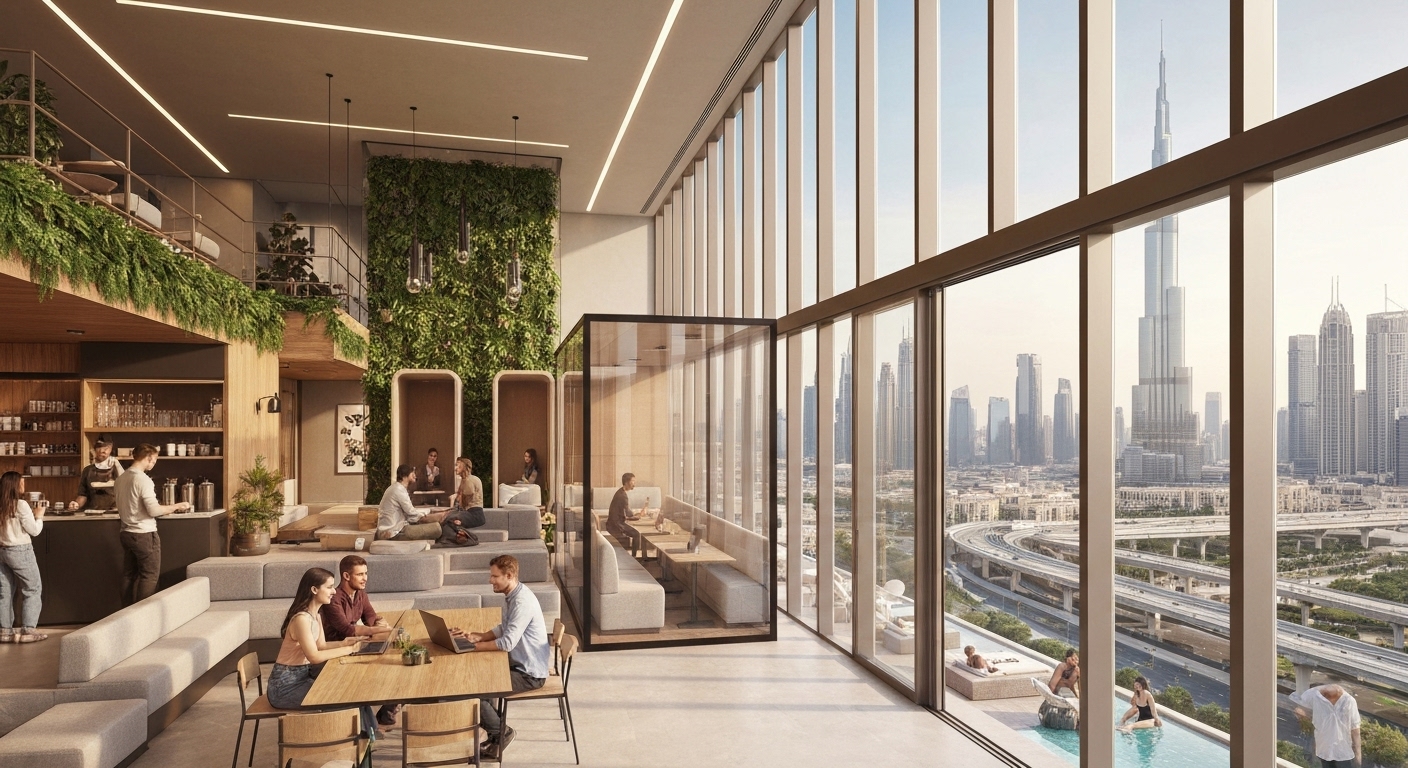
Understanding the Co-Living Phenomenon in Dubai
Dubai’s real estate landscape has undergone a remarkable transformation, with co-living emerging as one of the most exciting investment opportunities in 2025. The co-living concept reimagines traditional residential living by combining private bedrooms with shared common areas, creating community-focused environments that resonate strongly with today’s mobile workforce.
This innovative housing model has gained significant traction in Dubai, driven by the emirate’s position as a global hub for young professionals, expatriates, and students. With rental yields averaging 6-8% across Dubai’s property market and studios achieving up to 8.25% returns, co-living spaces present an attractive proposition for savvy investors.
Why Dubai’s Youthful Demographic is Driving Co-Living Demand
Dubai’s demographics tell a compelling story for co-living investments. The city attracts thousands of young professionals, digital nomads, and students annually, creating a robust demand base for flexible, community-oriented housing solutions. This youthful population values experiences over ownership, seeking accommodation that offers both affordability and lifestyle enhancement.
The emirate’s growing reputation as a business hub, combined with initiatives like the Dubai Digital Nomads community, has created an ecosystem where shared living concepts thrive. Young residents prioritize location, amenities, and social connectivity over traditional space requirements, making co-living an ideal match for their lifestyle preferences.
The Investment Landscape: Returns and Opportunities in Dubai Co-Living
The financial fundamentals supporting co-living investments in Dubai are impressive. With average property value appreciation of 18% year-over-year in 2024 and rental yields consistently outperforming major international cities, the market offers compelling returns for investors.
Transaction volumes have surged, with over 32,000 transactions valued at AED 84 billion in Q1 2025 alone, representing an 18% increase compared to the previous year. This growth is underpinned by a continued supply shortage, with only 30,200 residential units delivered in 2024, creating favorable conditions for rental income generation.
Key Benefits for Investors and Residents in Co-Living Spaces
Co-living investments offer multiple revenue streams and operational advantages. For investors, these properties typically generate higher rental yields per square foot compared to traditional units, as multiple tenants share common areas while paying individual rents.
From a resident perspective, co-living spaces provide access to premium amenities at affordable rates. Modern co-living developments feature fully furnished units with over 40 facilities and amenities including health clubs, swimming pools, business centers, and social spaces. These comprehensive offerings create strong tenant retention and justify premium pricing.
The flexibility factor cannot be understated. Co-living appeals to Dubai’s transient professional population, offering lease terms that accommodate career mobility while maintaining consistent occupancy rates for investors.
Navigating the Challenges and Risks of Co-Living Investments
While co-living presents attractive opportunities, investors must consider specific challenges. Higher tenant turnover requires robust property management systems and marketing strategies. Additionally, the success of co-living heavily depends on location, with properties near business districts, educational institutions, and transportation hubs performing significantly better.
Regulatory considerations also play a role, as co-living operators must ensure compliance with local housing regulations and safety standards. Investors should factor in higher operational costs associated with common area maintenance and enhanced security requirements.
Maximizing Your Investment: What to Look for in a Dubai Co-Living Project
Successful co-living investments share common characteristics. Prime locations in areas like Business Bay, Jumeirah Village Circle, and Dubai Hills offer proximity to employment centers and lifestyle amenities. Properties with comprehensive facilities including gyms, co-working spaces, and community areas command premium rents and attract quality tenants.
Smart home technology and flexible space design enhance appeal among tech-savvy young professionals. Additionally, developments offering fully furnished units reduce barriers to entry for international residents, ensuring faster occupancy rates.
The Future of Co-Living in Dubai: Trends and Predictions
The outlook for co-living in Dubai remains exceptionally positive. With population growth outpacing supply and the emirate’s continued evolution as a global business hub, demand for innovative housing solutions will intensify.
Government initiatives supporting remote work and digital entrepreneurship further strengthen the co-living market fundamentals. As Dubai positions itself as the preferred destination for global talent, co-living investments aligned with this demographic shift offer sustainable long-term returns.
The integration of sustainability features and wellness-focused amenities represents the next evolution in co-living design, positioning forward-thinking investors to capitalize on changing lifestyle preferences while contributing to Dubai’s vision as a world-class living destination.