


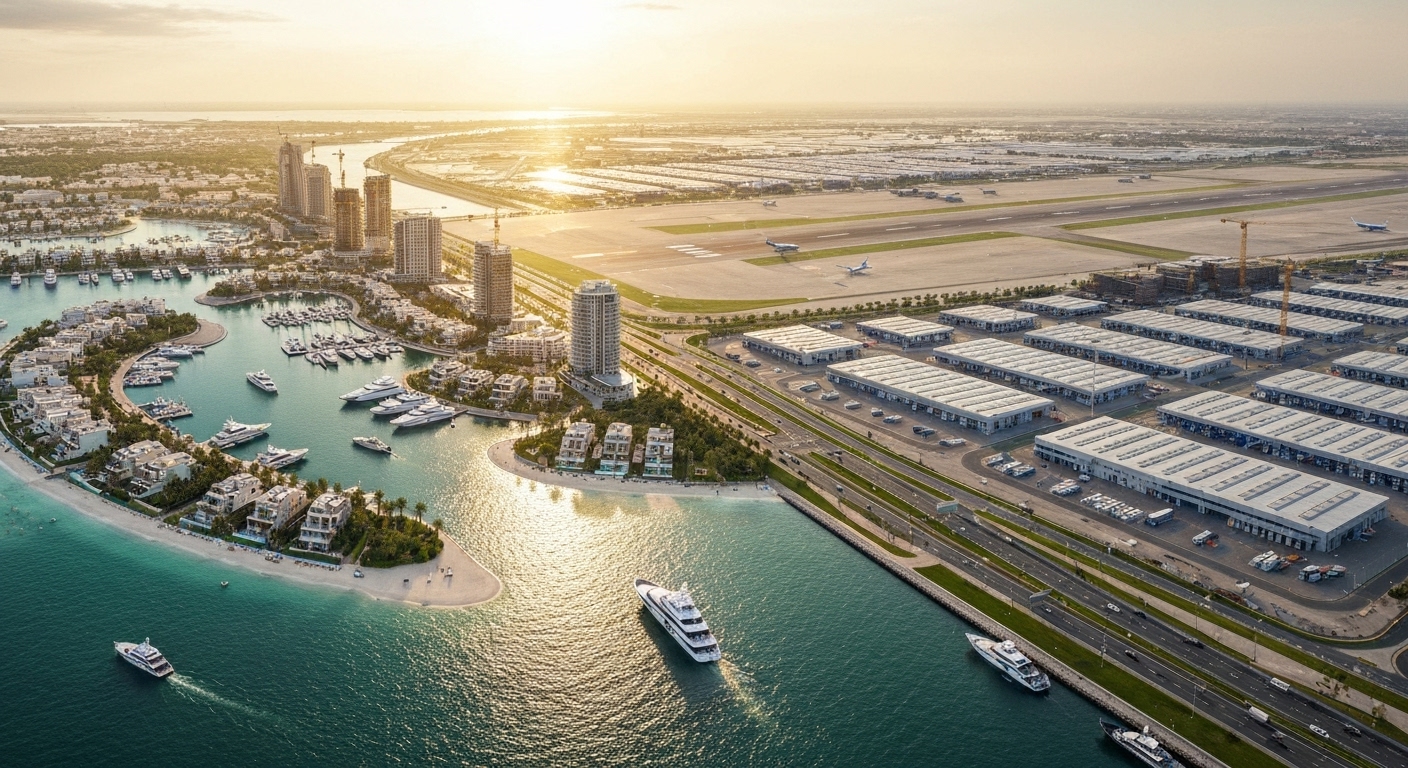
Dubai’s rapid evolution continues with two ambitious mega-projects capturing global attention: Palm Jebel Ali and Dubai South. These developments represent distinctly different investment philosophies and lifestyle concepts, each targeting unique segments of the global market. Understanding their core differences is crucial for making informed investment decisions in Dubai’s dynamic real estate landscape.
Understanding the Vision: Palm Jebel Ali vs. Dubai South’s Core Concepts
Palm Jebel Ali emerges as Dubai’s next iconic waterfront destination, building on the proven success of Palm Jumeirah while introducing contemporary luxury living concepts. This man-made island development focuses on premium residential communities, luxury resorts, and exclusive beachfront properties that cater to high-net-worth individuals seeking premium lifestyle amenities.
Dubai South represents a fundamentally different approach, positioning itself as an integrated smart city centered around Al Maktoum International Airport. This development prioritizes connectivity, business efficiency, and sustainable urban planning, targeting global corporations, logistics operations, and forward-thinking residents who value proximity to major transportation infrastructure.
Key Features and Infrastructure: What Each Mega-Project Offers
Palm Jebel Ali delivers world-class waterfront living with pristine beaches, luxury marinas, and resort-style amenities. The development integrates residential towers, beach villas, and hospitality components within a master-planned island environment designed for leisure and exclusivity.
Dubai South’s infrastructure tells a different story, built around the world’s largest airport project with integrated logistics hubs, commercial districts, and residential communities. The development features smart city technologies, sustainable building standards, and direct connectivity to global trade routes. With North American REITs securing AED 2.8 billion in logistics assets near Al Maktoum International Airport, institutional confidence in Dubai South’s commercial potential is clearly demonstrated.
Investment Potential: Analyzing ROI and Growth Prospects
Both projects offer compelling investment narratives, though targeting different investor profiles. Palm Jebel Ali appeals to investors seeking premium lifestyle assets with strong rental yields from luxury tourism and high-end residential markets. The waterfront location commands premium pricing, historically delivering strong capital appreciation in Dubai’s established beachfront communities.
Dubai South’s investment appeal lies in its strategic positioning within Dubai’s economic infrastructure. With logistics hubs delivering average yields of 8.2% and projected capital growth of 14-17% through 2027, the development benefits from Dubai’s role as a global trade hub. Mixed-use developments in the area show particularly strong performance, with projected returns of 16-22% supported by Dubai’s sustained GDP growth forecast of 4.2% for 2025.
Lifestyle & Community: Which Project Suits Your Needs?
Palm Jebel Ali creates an exclusive island lifestyle centered around premium amenities, beachfront access, and luxury hospitality services. The community appeals to residents seeking privacy, exclusivity, and world-class leisure facilities within a resort-style environment.
Dubai South offers a different lifestyle proposition focused on convenience, connectivity, and modern urban living. The community attracts international professionals, global business travelers, and families who prioritize access to educational institutions, healthcare facilities, and major employment centers. The development’s integration with transportation infrastructure makes it ideal for residents with frequent travel requirements.
Connectivity and Location Advantage: Accessibility to Key Dubai Hubs
Palm Jebel Ali’s connectivity focuses on premium transportation links, including private yacht access, helicopter services, and dedicated roadway connections to Dubai’s major districts. While more exclusive in nature, the development ensures seamless access to Dubai’s business and entertainment centers.
Dubai South’s connectivity advantage is unmatched, with direct airport access, planned metro integration through the Blue Line extension, and proximity to major highways connecting all emirates. Properties near transportation hubs command premium valuations and higher occupancy rates, making Dubai South particularly attractive for investors prioritizing long-term capital appreciation through infrastructure development.
Future Outlook: Projected Developments and Long-Term Value
Both mega-projects benefit from Dubai’s continued infrastructure investment and economic diversification. Palm Jebel Ali’s future value depends on Dubai’s tourism growth, with 18.5 million visitors recorded in 2024, and the continued appeal of luxury waterfront living among global investors.
Dubai South’s trajectory aligns with broader economic trends driving logistics asset appreciation and e-commerce growth. The development’s integration with Al Maktoum International Airport positions it to benefit from Dubai’s expanding role as a global aviation and trade hub.
Making Your Choice: A Comparative Summary for Investors and Residents
The choice between Palm Jebel Ali and Dubai South ultimately depends on investment objectives and lifestyle preferences. Palm Jebel Ali suits investors seeking luxury lifestyle assets with strong tourism-driven returns and residents prioritizing exclusive beachfront living.
Dubai South appeals to strategic investors focused on infrastructure-driven growth and residents valuing connectivity, business opportunities, and modern urban amenities. With institutional investors allocating billions toward mixed-use developments across prime districts, both projects demonstrate strong fundamentals supporting long-term value creation in Dubai’s evolving real estate landscape.