


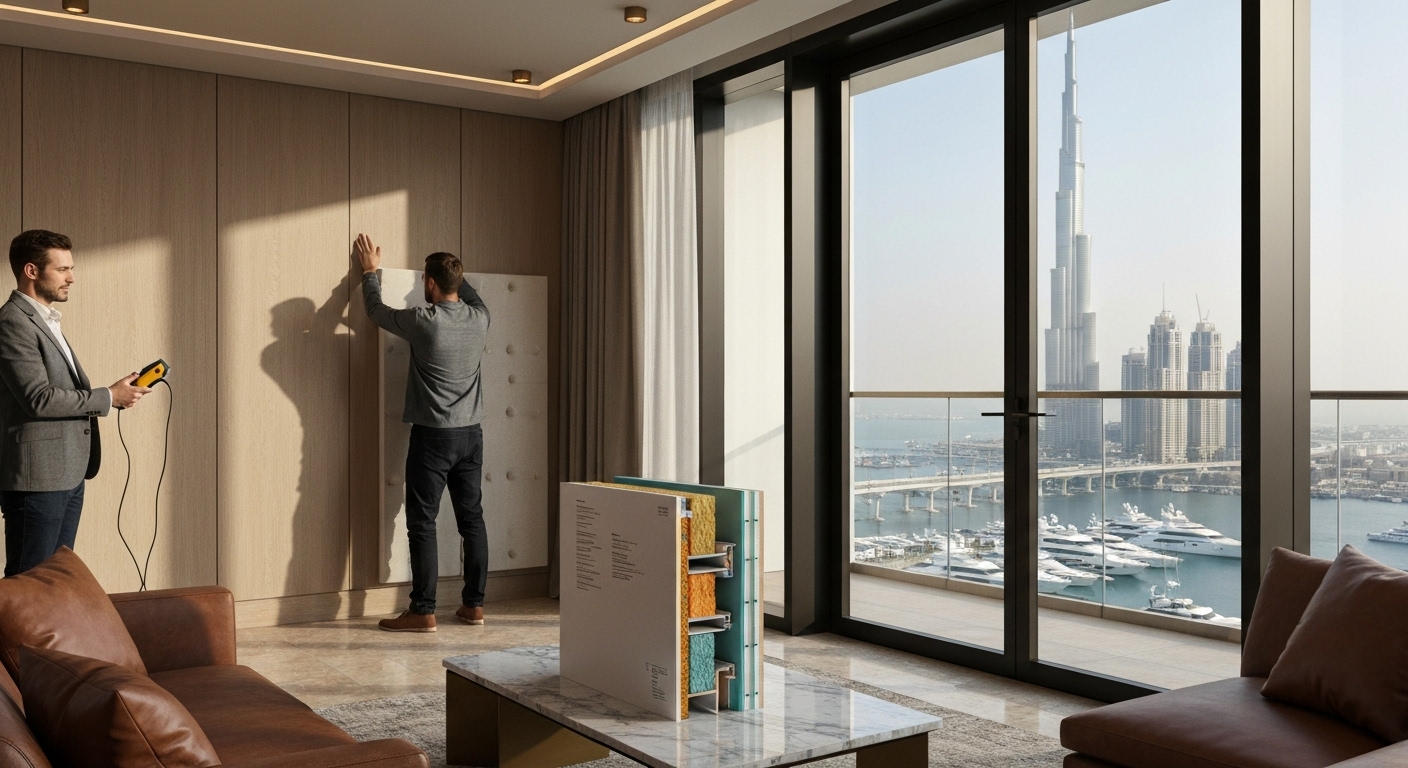
Understanding the soundproofing standards for new apartments in Dubai is essential for investors, buyers, and industry professionals seeking tranquility in a vibrant city. Dubai’s rapid urban development creates unique acoustic challenges, making high-quality sound insulation critical for today’s apartment buyers and renters. This article addresses official regulations, what makes a well-soundproofed home, and how Danube Properties ensures acoustic comfort in its developments.
Understanding the Importance of Soundproofing in Dubai’s Urban Landscape
Dubai’s skyline is constantly evolving, with new apartment towers rising across bustling neighborhoods like Jumeirah Village Circle, Downtown Dubai, and near major metro lines. The density and pace of life mean that unwanted noise-from traffic to neighbors-is a significant concern for residents and investors alike. Effective soundproofing not only protects privacy but also supports well-being and property value.
Families, professionals, and investors are prioritizing apartments that guarantee peace amid the city’s activity. Developers, especially those catering to international standards, recognize that acoustic comfort is a key factor influencing buying decisions. In Dubai, where demand for high-end living converges with practical needs, soundproofing has become a top expectation, not just an added perk.
Official Soundproofing Regulations and Standards for New Apartments in Dubai
Dubai’s construction sector is governed by the Dubai Municipality’s Building Code and aligned with international best practices for sound insulation in residential buildings. Regulations require new apartments to meet specific acoustic performance standards, focusing on both airborne and impact sound transmission.
The code references Sound Transmission Class (STC) ratings, which measure how well walls, floors, and doors reduce noise. For typical apartment partitions, an STC rating of 50 or higher is expected. This standard ensures loud speech is not audible between rooms, providing substantial day-to-day comfort. Floor assemblies must also limit impact noise—such as footsteps—which is addressed through separate ratings like Impact Insulation Class (IIC).
Developers must comply with these benchmarks by law. These requirements are especially vital in high-density neighborhoods, where proximity to neighbors and public spaces can intensify unwanted sound.
Key Sound Transmission Class (STC) Ratings and Beyond: What Developers Must Meet
STC ratings serve as the main benchmark for wall and floor assemblies. In Dubai’s new apartments, an STC of 50 is generally mandatory for demising walls, meaning those separating living units, and at least STC 45 for corridor walls. Entry doors should also meet an appropriate acoustic standard, ensuring the entire sound envelope is robust.
Advanced projects may go further, offering double-glazed windows, acoustic sealants, and dense construction materials to exceed the regulatory minimum and appeal to discerning buyers.
Assessing Soundproofing Quality in Your Apartment
When evaluating an apartment—whether as a residence or investment—inspect details like the thickness of walls, quality of windows, and presence of door seals. Ask the developer for documented STC or relevant acoustic ratings. In premium developments, you may also find test certificates or demonstrations highlighting the building’s sound insulation.
Construction Techniques and Materials: Ensuring Superior Sound Insulation
In Dubai’s dynamic real estate market, superior soundproofing has become an essential component of modern residential construction. Developers often incorporate high-density blockwork, quality plastering, and double-glazed facade systems to minimize both airborne and impact noise within apartments.
Projects are typically designed with resident comfort in mind, using materials and methods approved by Dubai Municipality. In high-traffic areas or locations near metro lines, additional attention is given to wall assemblies and window systems to achieve stronger acoustic separation. While techniques may vary based on building type or site conditions, the overall approach remains focused on meeting or exceeding regulatory acoustic standards.
Beyond Compliance: Enhance Acoustic Comfort in New Developments
In many of Dubai’s modern residential projects, acoustic comfort goes beyond meeting basic regulatory requirements. Developers increasingly integrate innovative sound-absorbing materials and design internal layouts that naturally reduce sound transfer between units. These enhancements add meaningful value for residents seeking peace and privacy as part of contemporary urban living.
From higher-quality materials to improved engineering practices, these measures support long-term resident satisfaction and help maintain the asset value of new homes by ensuring quieter, more private environments.
Conclusion
For those researching soundproofing standards for new apartments in Dubai, understanding both the regulations and real-world applications is essential. Dubai mandates strong STC and IIC benchmarks to promote acoustic comfort in every new build. Leading developers enhance these minimums through superior design choices and advanced materials, helping ensure lasting tranquility for residents and investors alike.