


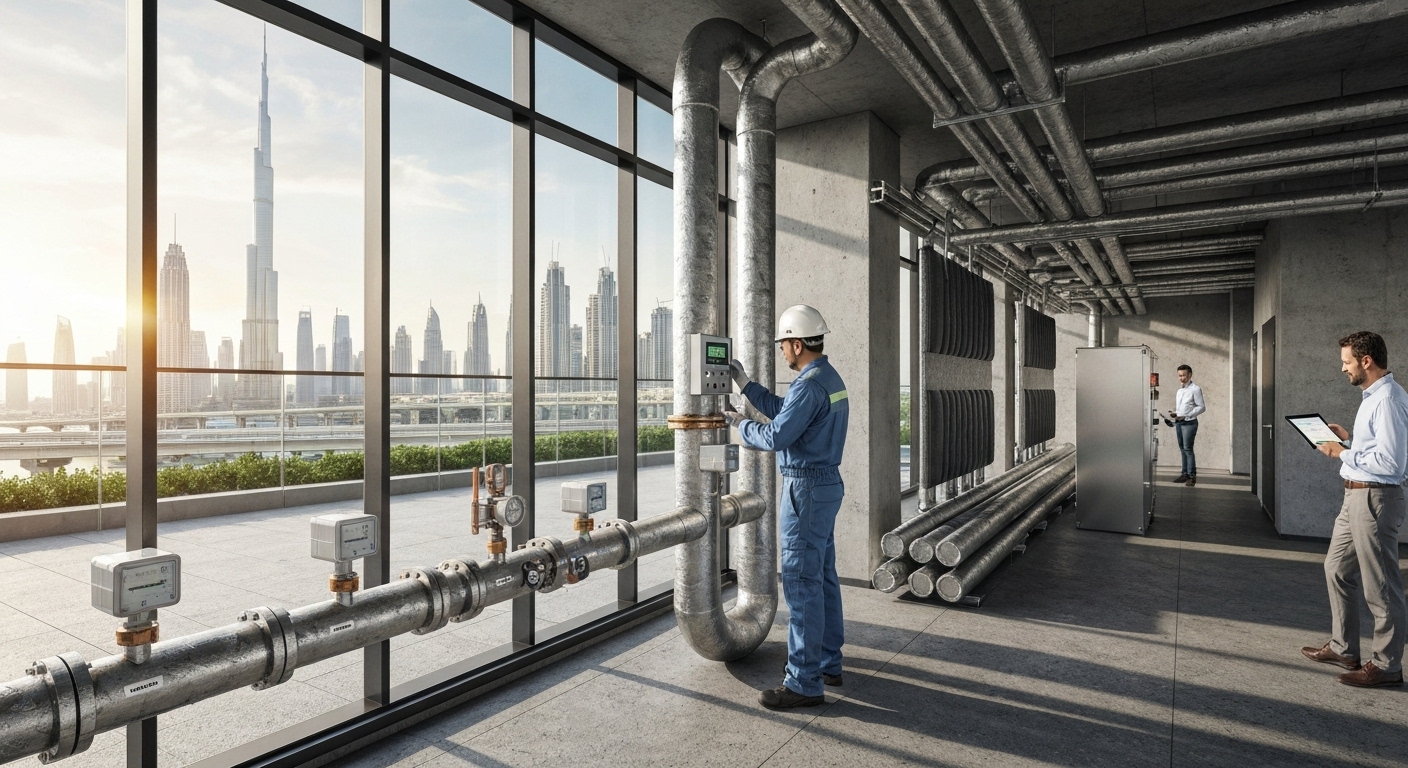
Dubai property cooling charges explained: empower vs emicool: this is a crucial topic for property owners, tenants, and investors aiming to understand how cooling costs impact their budgets and investment returns. In this guide, we break down district cooling in Dubai, clarify the differences between Empower and Emicool, and reveal nuances around “chiller-free” properties to help you make informed decisions.
Understanding District Cooling in Dubai: A Primer
District cooling is the leading method for air conditioning in Dubai’s major residential and commercial neighborhoods. Unlike traditional split or window air conditioners, district cooling distributes chilled water from a central plant through a network of insulated pipes. This efficient, centralized approach is designed to reduce energy usage, ensure consistent cooling, and support Dubai’s sustainability goals.
In rapidly growing communities like Business Bay, Jumeirah Village Circle (JVC), and Dubai Marina, district cooling is often mandatory for new developments. Most landlords and developers partner with licensed providers—primarily Empower or Emicool—to manage the generation and distribution of chilled water. For property buyers and tenants, this service typically reflects as a separate line item on their utility bills.
Empower vs. Emicool: A Detailed Comparison
When comparing Dubai’s two leading district cooling providers—Empower and Emicool—understanding their differences comes down to charges, billing transparency, and customer experience.
Empower is the region’s largest provider, servicing high-profile neighborhoods such as Downtown Dubai, Business Bay, and Jumeirah Beach Residence. Emicool, while not as dominant in market share, has a strong presence in Dubai Investment Park, Motor City, and select projects in Al Barsha and IMPZ. Both companies follow a similar model: charging end-users a mix of fixed and variable fees based on actual consumption.
Empower typically charges a capacity fee (fixed) based on the size of your apartment or villa and an energy consumption fee (variable, AED/kWh equivalent). Emicool’s structure is broadly similar, but their base rates and administrative charges may differ slightly depending on location and building agreements. It is common to see variation in minimum invoice amounts and payment schedules between providers.
For investors, factors such as transfer charges (when selling a property), late payment penalties, and activation fees may vary between Empower and Emicool. Reviewing these before committing to a purchase or tenancy can avoid unpleasant surprises.
Decoding the Cooling Bill: Empower and Emicool Charges
Both Empower and Emicool break down their bills into three primary components:
- Capacity Charge: A fixed monthly fee proportional to the unit’s gross internal area. This is meant to cover the availability of cooling regardless of use.
- Consumption Charge: A variable cost based on actual cooling usage, typically measured in tons of refrigeration (TR). The rate is preset by the provider.
- Admin/Service Fee: Covers meter reading, billing, and customer service. This may also include VAT and municipal taxes, depending on the property location.
For a typical one-bedroom apartment in Dubai, monthly cooling bills (including all components) can range between AED 400–AED 700 during peak summer, though final rates depend on provider, usage, and building efficiency.
Variable Charges Example
During summer in Dubai Marina (Empower-served), a two-bedroom apartment could incur around AED 900 in a high consumption month, while a similar apartment in IMPZ (Emicool) may see slightly lower charges due to provider tariffs and building insulation.
Chiller-Free Properties: What Does it Mean for Your Cooling Costs?
“Chiller-free” describes properties where the landlord or developer pays for district cooling and absorbs the fee into the annual rent. For tenants, this means no separate cooling bill—an increasingly popular perk in competitive rental neighborhoods like JVC or Al Furjan.
While chiller-free contracts simplify budgeting, total rents in such properties are generally higher to offset the owner’s bulk cooling expense. For owners, offering chiller-free units can enhance property rental appeal but reduce flexibility to pass on rising cooling costs.
Choosing the Right Cooling Provider: Factors for Dubai Properties
The choice between Empower and Emicool is rarely up to end-users, as providers are tied to master developers and community agreements. However, owners and investors should consider:
- Historical rate adjustments and the provider’s track record in their target neighborhood
- Billing transparency and account management features
- Transfer fees or activation charges when changing tenants or selling
If you value predictability, ask about capacity charges and minimum billing before signing contracts.
Navigating Cooling Contracts and Activation
Once you purchase or rent in a district-cooled property, activating your cooling account with Empower or Emicool is mandatory. The process typically involves:
- Submit the title deed/Ejari and ID copies to the provider
- Paying a refundable security deposit and an activation fee (often AED 1,000–AED 2,500)
- Awaiting connection and meter reading before entering the property
Service transfer or deactivation for sales and move-outs involves separate paperwork and fees.
Cost-Saving Tips and Common Misconceptions
To minimize your Dubai cooling bill:
- Maintain AC filters and keep thermostats at 24°C
- Use blackout curtains to reduce heat gain
- Regularly inspect windows and doors for air leaks
A common misconception is that chiller-free always means “free cooling”—in reality, the cost is embedded in the rent or service charges. Comparison-shopping for providers is rarely possible, as your building agreement determines your cooling company.
In summary, understanding Dubai property cooling charges—along with the differences between Empower and Emicool—allows owners, tenants, and investors to budget accurately and maximize property returns.