


Dubai property cooling charges are a major consideration for anyone buying, renting, or investing in residential or commercial real estate in the city. This article will explain Dubai property cooling charges in simple terms, outline how they work under different systems, and help you understand what to expect on your bill, whether you are an owner or tenant.
What are Dubai Property Cooling Charges?
Cooling charges refer to the fees paid for air conditioning, which is essential in Dubai’s hot climate. Unlike in many cities where cooling is just part of the monthly electricity bill, Dubai properties often use specialized systems, most notably district cooling. These charges, typically measured in AED per square foot or based on consumption, are separate from general electricity and water bills. Residents in premium neighborhoods such as Palm Jumeirah and Dubai Marina – where luxury and modern infrastructure prevail — should pay close attention to these costs as they can impact the total cost of living and investment returns.
Understanding District Cooling: How It Works and Its Costs
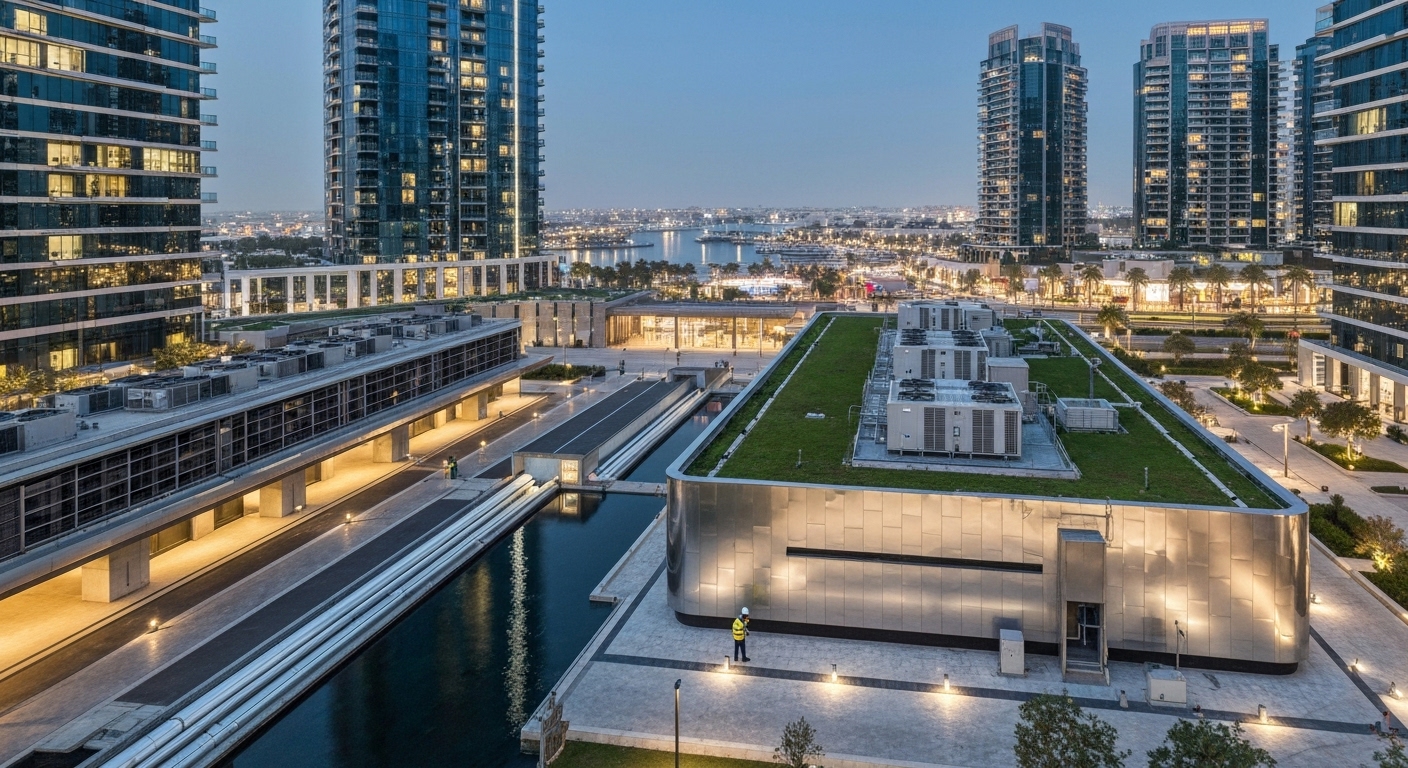
District cooling is a centralized system delivering chilled water from a dedicated plant through insulated pipes to multiple buildings in a neighborhood. The chilled water is used to cool air in each building, then circulated back to the plant to be cooled again. This setup is especially common in modern developments and master-planned communities across Dubai.
How costs are calculated:
District cooling providers (such as Empower or Tabreed) charge two main fees:
– Consumption charge: Based on the actual volume of cooling used (measured in tons of refrigeration or TR) with rates typically set per RT-hour.
– Capacity charge: A fixed monthly or yearly fee determined by the maximum cooling load assigned to your unit, sometimes proportional to square footage.
For a typical two-bedroom apartment, monthly cooling bills may range from AED 800–1,200 depending on provider rates, building efficiency, and usage habits.
Chiller-Free vs. District Cooling: Key Differences for Residents
What Does ‘Chiller-Free’ Mean?
In chiller-free properties, the landlord covers the cost of the central air conditioning plant (“the chiller”) and tenants pay only for electricity. This arrangement is often marketed as a cost-saving for tenants. In contrast, with district cooling, tenants or owners pay both the capacity and consumption charges directly to the provider.
Why does it matter?
For tenants, chiller-free units can appear more attractive due to the reduced monthly outlay. However, in many premium luxury towers, district cooling remains the standard due to its efficiency and scale. For investors, understanding the difference is crucial — lower apparent charges in chiller-free apartments might mean higher service fees for owners instead.
Breaking Down Your Cooling Bill: Components and Calculation
Dubai cooling bills can be confusing at first glance. Here’s what to look out for:
– Capacity Charge: This fixed charge is determined by your apartment’s size or “cooling load.” Expect this fee whether or not you are using your AC.
– Consumption Charge: This varies with actual use — running the system longer or at colder temperatures increases the bill.
– Other Fees: Some providers add metering, administrative, and late payment charges.
These costs are often billed directly by a third-party cooling company, not through DEWA (the main Dubai utilities authority).
Who Pays the Cooling Charges? Owner vs. Tenant Responsibilities
The Dubai rental market is diverse: some contracts specify that tenants pay all cooling charges, while others (especially in “chiller-free” properties) have landlords absorb the central plant fee. For buyers and investors, reviewing service charges and capacity allocations is essential for realistic yield calculations. Owners in luxury areas like Dubai Marina should budget for these as part of annual costs, usually alongside other service and municipality charges.
Tips for Managing and Reducing Your Dubai Cooling Costs
Dubai residents often underestimate the impact of cooling bills. To keep costs manageable:
– Maintain AC units regularly to improve efficiency.
– Set thermostats to a reasonable temperature (24–25°C is comfortable and reduces load).
– Seal windows and doors to prevent hot air infiltration.
– Consider energy-efficient window treatments or smart thermostats.
Some buildings offer advanced cooling controls and monitoring — a valuable feature for both residents and investors focused on operational efficiency.
The Future of Cooling in Dubai: Trends and Considerations
With Dubai’s focus on sustainability, district cooling is set to expand, using more efficient technology and renewable energy sources. Regulations and pricing models are also evolving, so it is advisable to review all contract terms regarding cooling fees when investing in or leasing Dubai real estate.
In summary, understanding Dubai property cooling charges is crucial for anyone living or investing in the city. These fees vary by system, neighborhood, and contract terms — but with the right knowledge, you can plan, budget, and even reduce your cooling expenses.