


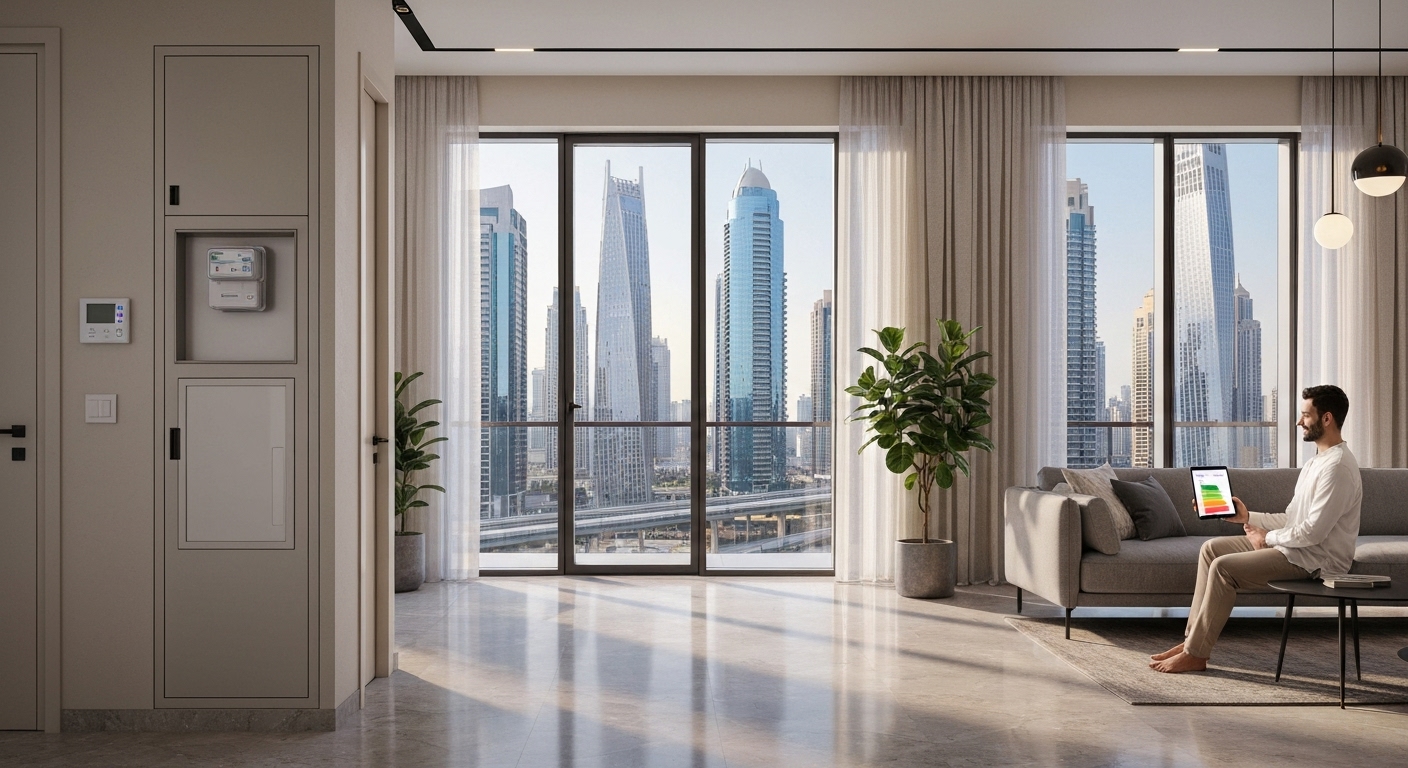
Living in a 2-bedroom apartment in Jumeirah Lake Towers (JLT), Dubai, means enjoying an upscale lifestyle with stunning skyline views and a vibrant neighborhood. But before you settle in, it’s essential to understand exactly how to calculate cooling charges for your 2-bed apartment in JLT. This guide answers the question by breaking down the components, calculation method, and typical costs, so you can confidently plan your household budget.
Understanding District Cooling in JLT: The Basics
JLT is one of Dubai’s most sought-after communities, offering modern apartments, open green spaces, and proximity to major destinations like DMCC Metro and Dubai Marina Mall. Most buildings in JLT use district cooling systems instead of traditional air conditioning units. District cooling relies on a central plant that chills water and supplies it via insulated pipes to residential towers, providing efficient and consistent temperature control throughout your apartment.
Key Components of Cooling Charges: Capacity vs. Consumption
When reviewing your cooling bill for a 2-bedroom apartment in JLT, you will notice two main components:
- Capacity charges: A fixed monthly fee based on the cooling capacity allocated to your unit, usually measured in Refrigeration Tons (RT). This charge covers the maintenance and infrastructure costs of the cooling provider.
- Consumption charges: A variable fee based on your actual energy usage (how much chilled water you consume to cool your apartment). This component can fluctuate month-to-month, depending on your usage patterns and the season.
Understanding these fixed and variable parts is crucial for accurately predicting your monthly cooling expenses.
How to Calculate Cooling Charges for Your 2-Bedroom Apartment in JLT (Step-by-Step Guide)
Here’s a practical step-by-step approach to calculating cooling charges for a 2-bed apartment in JLT:
- Identify the allotted cooling capacity: Most 2-bedroom apartments in JLT are allocated between 1.2 to 1.5 RT.
- Obtain the tariff rates: The cooling provider (often Empower or another district cooling operator) publishes the exact rates. As of early 2024, typical rates are around AED 750–900 per RT per year for capacity, and AED 0.7–0.85 per RT hour for consumption (rates can vary, so check your building’s provider for updates).
- Calculate capacity charge: Multiply your apartment’s RT allocation by the annual capacity rate, then divide by 12 for the monthly cost.
- For example, 1.5 RT x AED 800 = AED 1,200/year → AED 100/month (capacity).
- Estimate consumption charge: Multiply your average monthly RT hours by the consumption rate.
- If your usage averages 400 RT hours per month: 400 x AED 0.8 = AED 320/month (consumption).
- Add both charges for your total monthly cooling bill: In this example, AED 100 (capacity) + AED 320 (consumption) = AED 420 total cooling charges per month.
Example Calculation for JLT 2-Bedroom
For a typical 2-bedroom apartment in Jumeirah Lake Towers:
- Allocated capacity: 1.5 RT
- Capacity rate: AED 800 per RT/year
- Consumption: 400 RT hours per month (average)
- Consumption rate: AED 0.8 per RT hour
Total monthly cooling charge: AED 100 (capacity) + AED 320 (consumption) = AED 420/month
Average Cooling Costs for 2-Bedroom Apartments in JLT (with examples)
The average monthly cooling charges for a 2-bedroom apartment in JLT typically range from AED 350 to AED 600, depending on individual consumption patterns, building efficiency, and seasonal factors. Apartments in newer developments might benefit from better insulation and more efficient chillers, helping to keep costs toward the lower end of that range.
Factors Influencing Your JLT Cooling Bill
Several dynamics can affect your cooling charges in JLT:
- Apartment orientation: Units facing the sun for longer hours will have higher consumption.
- Window quality and insulation: Better insulation reduces heat ingress, lowering cooling requirements.
- Personal usage habits: Frequent use of air conditioning or maintaining very low interior temperatures raises consumption charges.
- Provider tariffs: Charges can differ slightly depending on which district cooling company services your building.
Chiller-Free vs. District Cooling: What to Expect in JLT
In “chiller-free” apartments, the landlord absorbs cooling costs, and you pay only for DEWA electricity and water. Most 2-bedroom units in JLT, however, use district cooling, meaning tenants pay both capacity and consumption directly to the provider. Always verify with property management whether cooling is billed separately or included in the rent.
Tips to Optimize and Reduce Your Cooling Charges in JLT
- Keep your thermostat between 23–25°C for optimal efficiency.
- Use blackout curtains or blinds during the hottest parts of the day.
- Ensure windows and doors seal well to prevent air leaks.
- Run ceiling fans to circulate cool air and reduce AC load.
- Schedule regular AC maintenance to maximize efficiency.
Conclusion
To answer “How do I calculate cooling charges for a 2-bed apartment in JLT?”: Add your monthly capacity charge (based on RT allotment) to your consumption charge (actual cooling usage), using your provider’s current rates. With this knowledge, you can confidently estimate and manage your cooling costs in Jumeirah Lake Towers.