


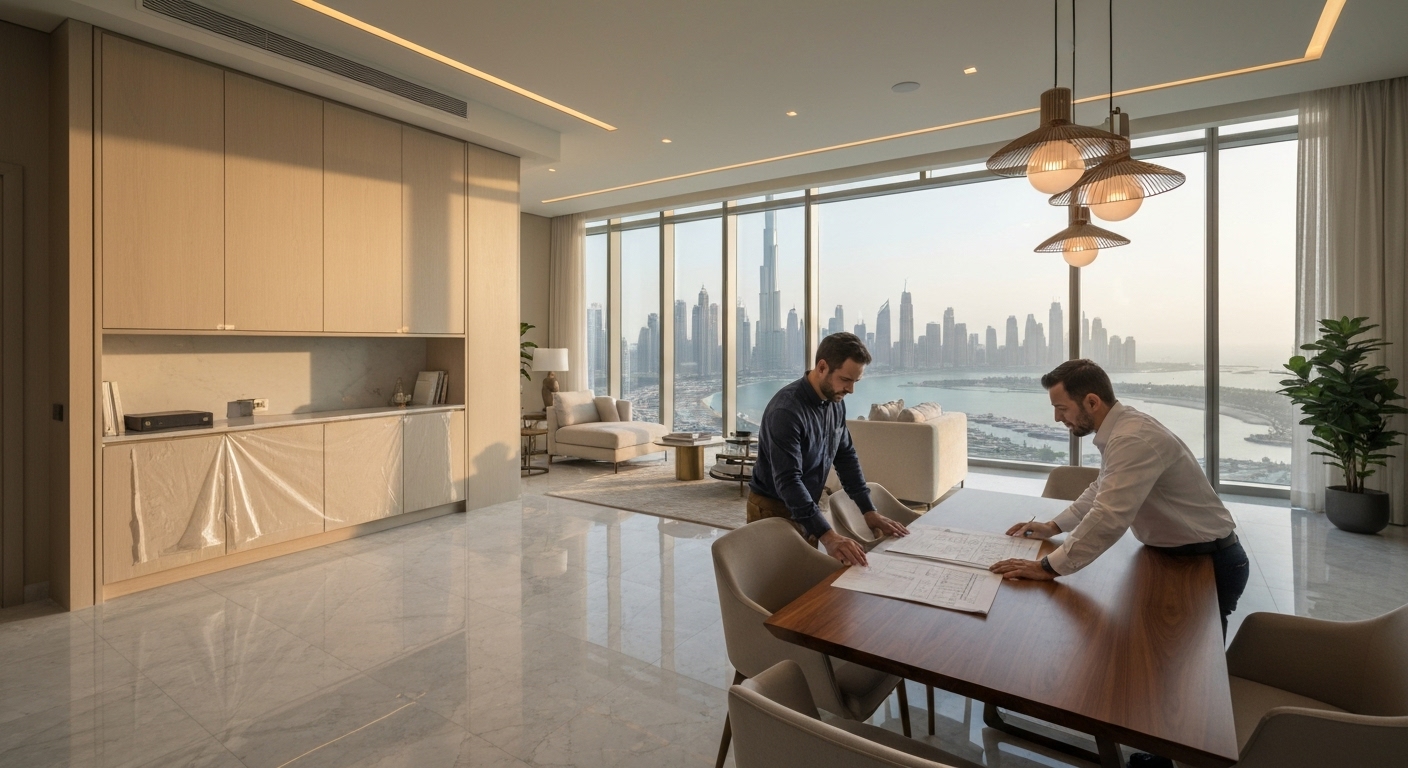
If you are asking, “What are the rules for modifying a furnished apartment from a developer in Dubai?”, you are not alone. Many owners and buyers are eager to personalize their spaces but are unsure about legal requirements, approval processes, and what’s actually allowed in Dubai. This article covers everything you need to know about modifying a furnished apartment bought directly from a developer, including the steps, legal considerations, and practical tips for Dubai’s property landscape.
Understanding the Difference: Furnished vs. Unfurnished Apartment Modifications in Dubai
Modifying a furnished apartment differs significantly from making changes to an unfurnished unit. With furnished apartments, the developer typically provides a ready-to-move-in home, complete with appliances, decor, and finished interiors. This turnkey approach is popular in Dubai neighborhoods like Jumeirah Village Circle and Al Furjan, offering convenience for busy professionals and expat investors.
When you modify an unfurnished apartment, you have flexibility over structural, aesthetic, or design changes, subject to building and authority approvals. In contrast, furnished apartments come with developer warranties and fit-out guarantees, meaning alterations may void existing guarantees or clash with pre-approved standards. Dubai’s property regulation framework holds furnished properties to strict modification rules to ensure design cohesion and protect long-term property value.
Key Stakeholders: Who to Consult Before Modifying Your Apartment
Before making any changes, you must consult three main stakeholders:
– The Developer: For furnished units—especially from established developers—interior elements are often under warranty for a fixed period. Any alteration may affect warranty claims or service agreements. Always check your contract for limitations.
– Building Management (Owners Association or Facilities Manager): Most managed buildings in Dubai require written approval for modifications to maintain aesthetics, safety standards, and harmonious living within the tower or community.
– Dubai Land Department (DLD): Major modifications, particularly those impacting layout or structure, require No Objection Certificates (NOCs) and, occasionally, permits approved by the DLD or relevant government authorities. The rules help ensure regulatory compliance and avoid future legal disputes.
Types of Modifications: What Is Allowed and What Is Not?
Generally, minor decorative changes are permitted and include painting walls, changing curtains, or adding soft furnishings. However, more substantial modifications-such as removing built-in furniture, altering flooring, reworking kitchen layouts, or changing the placement of fixtures provided by the developer-require prior approval.
Structural changes, like removing partitions, adjusting plumbing or electrical systems, or tampering with fire safety equipment, are strictly regulated. Unauthorized modifications can result in hefty fines or mandated restoration at the owner’s cost.
Examples of Allowed and Restricted Modifications
Allowed (usually with management/developer consent):
– Repainting walls with approved colors
– Upgrading lighting fixtures (without altering circuits)
– Installing removable shelving or storage
Restricted (requires NOC and authority approval):
– Demolishing built-in wardrobes or cabinets
– Changing kitchen or bathroom layouts
– Altering flooring materials
– Any works impacting fire alarms, HVAC, or building structure
The Approval Process: Step-by-Step for Securing NOCs and Permits
1. Consult Your Developer: Clarify what modifications are permitted without affecting your warranty. Obtain written consent if required.
2. Submit Plans to Building Management: Share detailed scope, design plans, and contractor credentials. Building management will review for safety, community standards, and structural integrity.
3. Apply for NOC: For major changes, request an NOC from the building’s Owners Association or developer, who may forward your request to the Dubai Land Department or Dubai Municipality.
4. Seek Government Approval: If modifications require municipal permits (e.g., for plumbing, electrical, or structural), apply through the DLD or appropriate authority.
5. Commence Approved Works: Only proceed after receiving all written approvals and permits. Engage licensed and insured contractors to avoid future disputes.
Legal Implications and Potential Penalties for Unauthorized Modifications
Dubai’s regulatory environment is strict. Unauthorized modifications can lead to:
– Cancellation of developer warranties
– Orders to restore the apartment to its original condition at your expense
– Monetary fines levied by building management or the DLD
– Additional scrutiny when selling or leasing the property
Non-compliance can also reduce your apartment’s resale value and lead to delays or rejection in property transfer processes.
Documentation Requirements: Preparing Your Application for Apartment Modifications
When seeking approval, prepare:
– Detailed design/layout drawings
– List of materials to be used
– NOC application forms (usually provided by the building or developer)
– Contractor licenses and insurance proofs
– Expected work schedule and method statements
Having complete and clear documents speeds up approval and reduces back-and-forth communications with management.
Tips for a Smooth Renovation Process in Your Apartment
– Always work with licensed, reputable contractors experienced in Dubai’s property regulations.
– Schedule works to minimize disruption to neighbors—most buildings restrict noisy works to certain hours.
– Keep all communications and NOCs well-documented for future reference and when reselling.
– Understand that modifications in prime Dubai neighborhoods may carry additional design or safety restrictions.
In summary, the rules for modifying a furnished apartment from a developer in Dubai are strict but navigable if you follow the official process. Engage all stakeholders, secure the right paperwork, and respect local guidelines to protect your investment.